
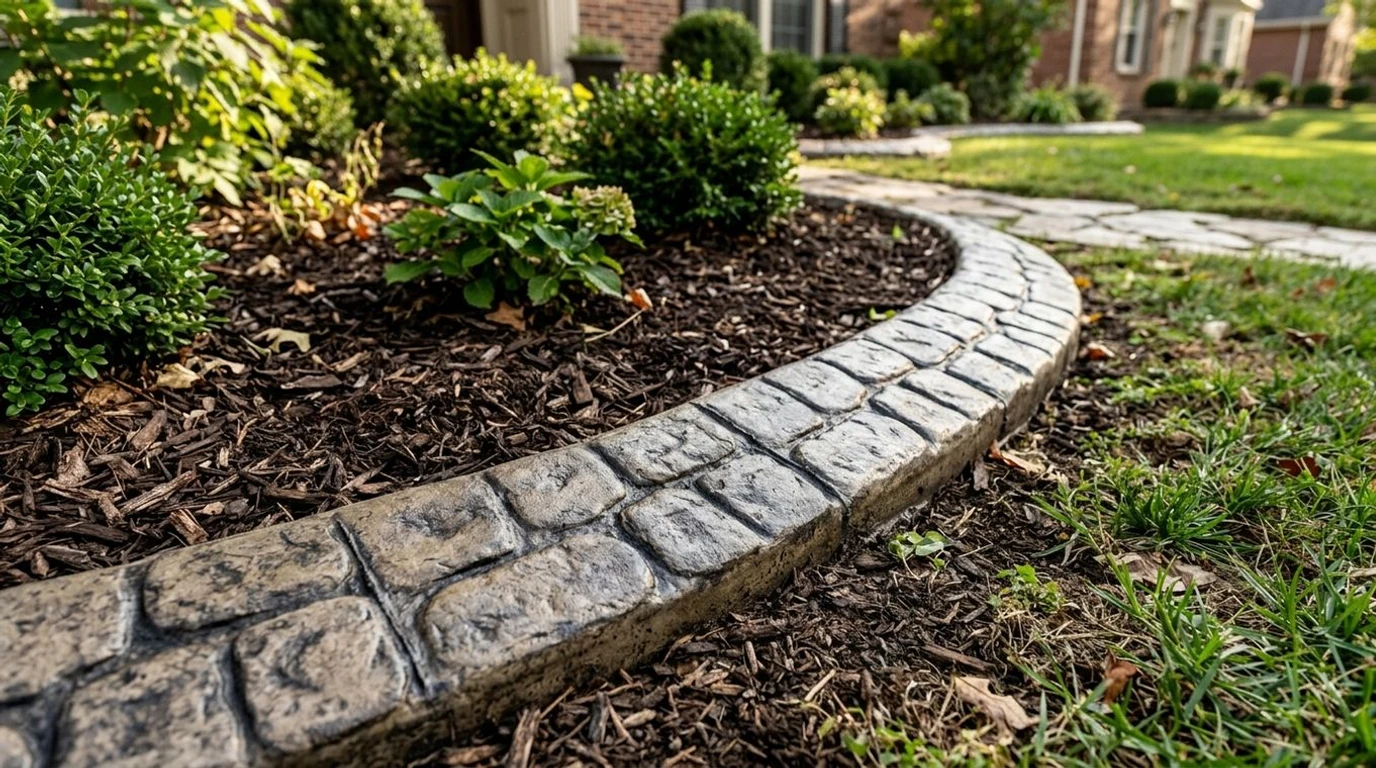
Stamped Concrete Curbing in Greater St. Louis
Plain concrete does what it's supposed to do. Stamped curbing does the same job while looking like it was built with far more intention. The texture is pressed into the surface during the pour — it's part of the concrete, not a coating that peels after a few seasons.
What Is Stamped Concrete Curbing?
Stamped concrete curbing is landscape edging with a textured pattern pressed into the surface during installation — before the material has fully cured. The stamping process uses dies or rollers to impress patterns like cobblestone, slate, brick, or wood grain directly into the fresh concrete.
An antiquing agent is applied before stamping to create contrast between the pattern's high and low points — the effect that makes stamped concrete read as stone or brick rather than patterned concrete. Sealer applied the same day protects the finish and enriches the color depth.
- Texture is part of the concrete structure, not a surface treatment
- Pattern and color applied in one continuous session
- Compatible with any profile shape
- No additional maintenance beyond standard sealing
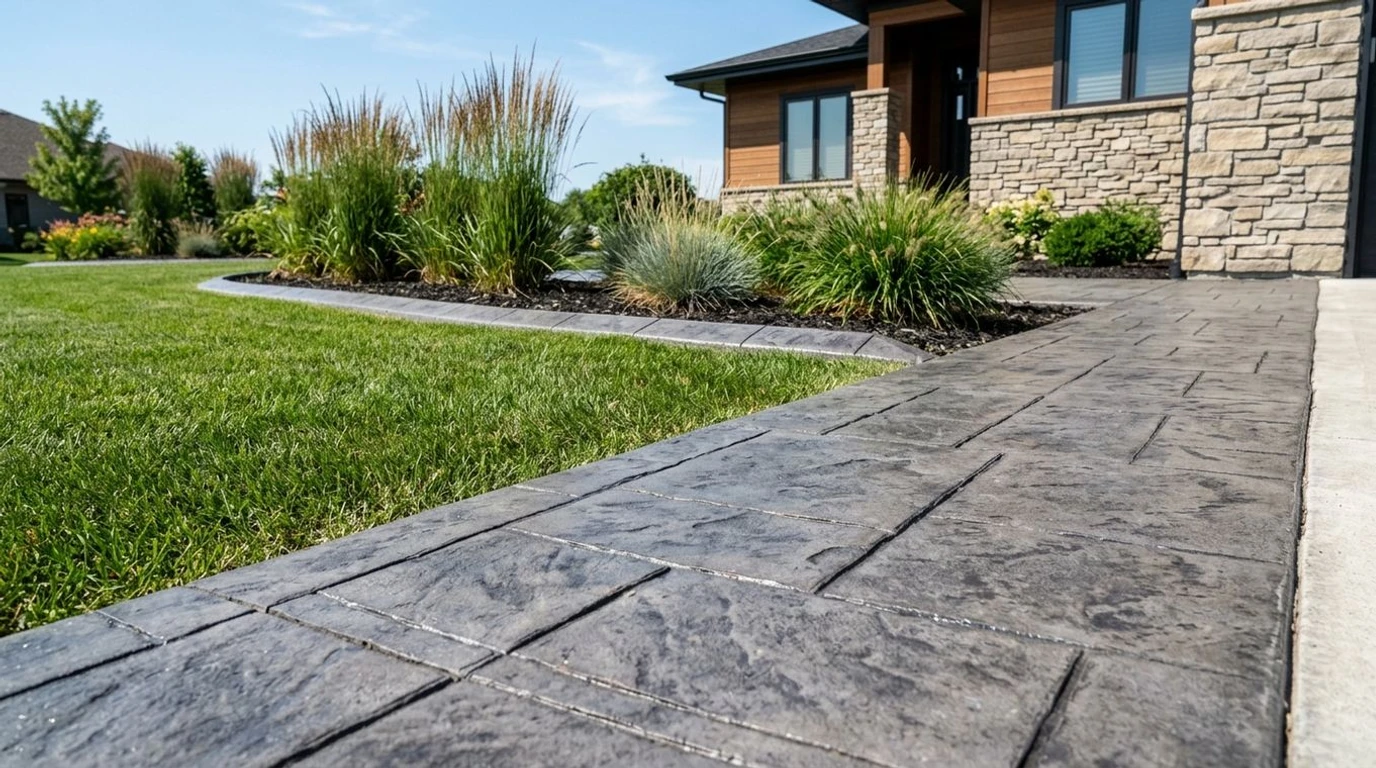
Available Stamp Patterns
Each pattern category has multiple specific dies — variations in scale, density, and edge definition that suit different architectural contexts.
Cobblestone
Rounded, irregular stones with a traditional, warm feel. Works well with brick construction and older neighborhoods like Kirkwood and Webster Groves.
Ashlar Slate
Large, flat rectangular panels with tight joints. Contemporary and structured — ideal for newer construction in Chesterfield and Town and Country.
Random Stone
Irregular natural flagstone shapes for an organic, natural look. The most versatile option across different home styles.
European Fan Cobble
Fanned semicircular pattern with a formal, symmetrical appearance. Perfect for properties with structured garden designs.
Wood Grain
Horizontal linear grain texture suited for Craftsman bungalows and cottage-style homes with mixed gardens.
Color System for Stamped Curbing
Color in stamped curbing involves multiple layers. Base color is set through integral pigment or color hardener. The antiquing agent applied before stamping adds the tonal variation that makes the pattern look dimensional.
Integral Base Color
Runs through the full depth — no gray exposed if scratched.
Color Hardener
Dry-shake powder for richer, more saturated surface color.
Antiquing Agent
Settles into low points for stone-like contrast.
Sealer Finish
Locks in color, provides UV and moisture protection.
Warm Tones
Complement brick and limestone exteriors
Cool Tones
Pair with stone veneer and modern construction
Earth Tones
Blend naturally with mulch and planting beds
Samples at every estimate. Ryan brings stamp dies and color chips to the property so options can be reviewed next to your actual home exterior and landscape materials.
Why Choose Stamped Curbing
Stamped curbing achieves the look of natural stone or brick without the joints, the maintenance, or the installed cost.
Part of the Concrete
The stamp is pressed during the pour — it's integral to the material, not a coating that peels or chips off.
Missouri Winter Tough
Properly sealed stamped curbing performs the same as plain concrete through freeze-thaw cycles.
Multi-Layer Color System
Integral base color, color hardener, antiquing agent, and sealer create depth that reads as natural stone.
Seamless Installation
Pattern and color are applied in one continuous session — no joints to crack or re-point like brick.
Low Maintenance
Reseal every 2-3 years to maintain color depth. No weeding between joints or replacing broken pieces.
Instant Curb Appeal
The kind of detail visitors notice without knowing why — it just looks more finished and intentional.
The Difference Stamped Curbing Makes
See how stamped patterns transform a standard concrete border into an architectural detail that complements your home's exterior.
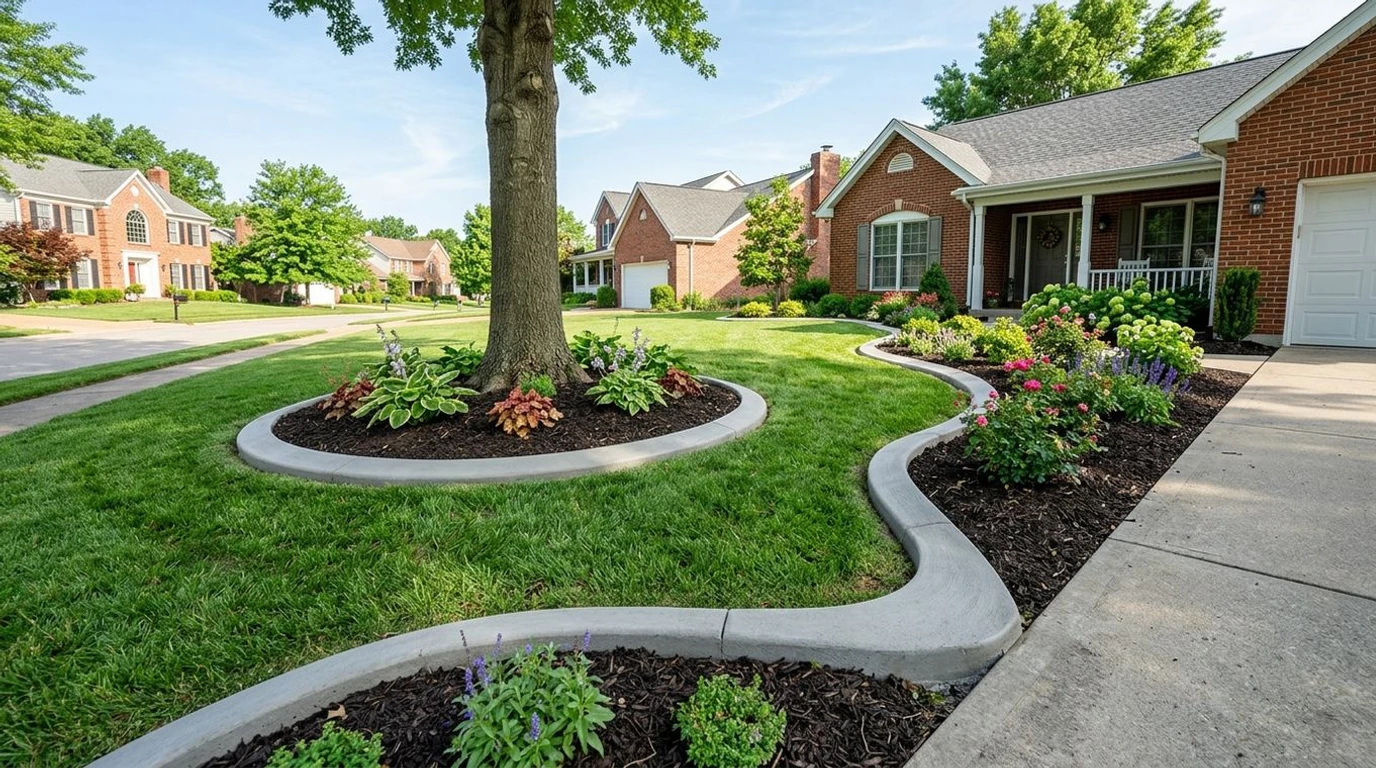
Plain Gray Curbing
- -Functional border — holds mulch, defines beds
- -Single uniform color throughout
- -Smooth surface without texture
- -Does the job, doesn't make a visual statement
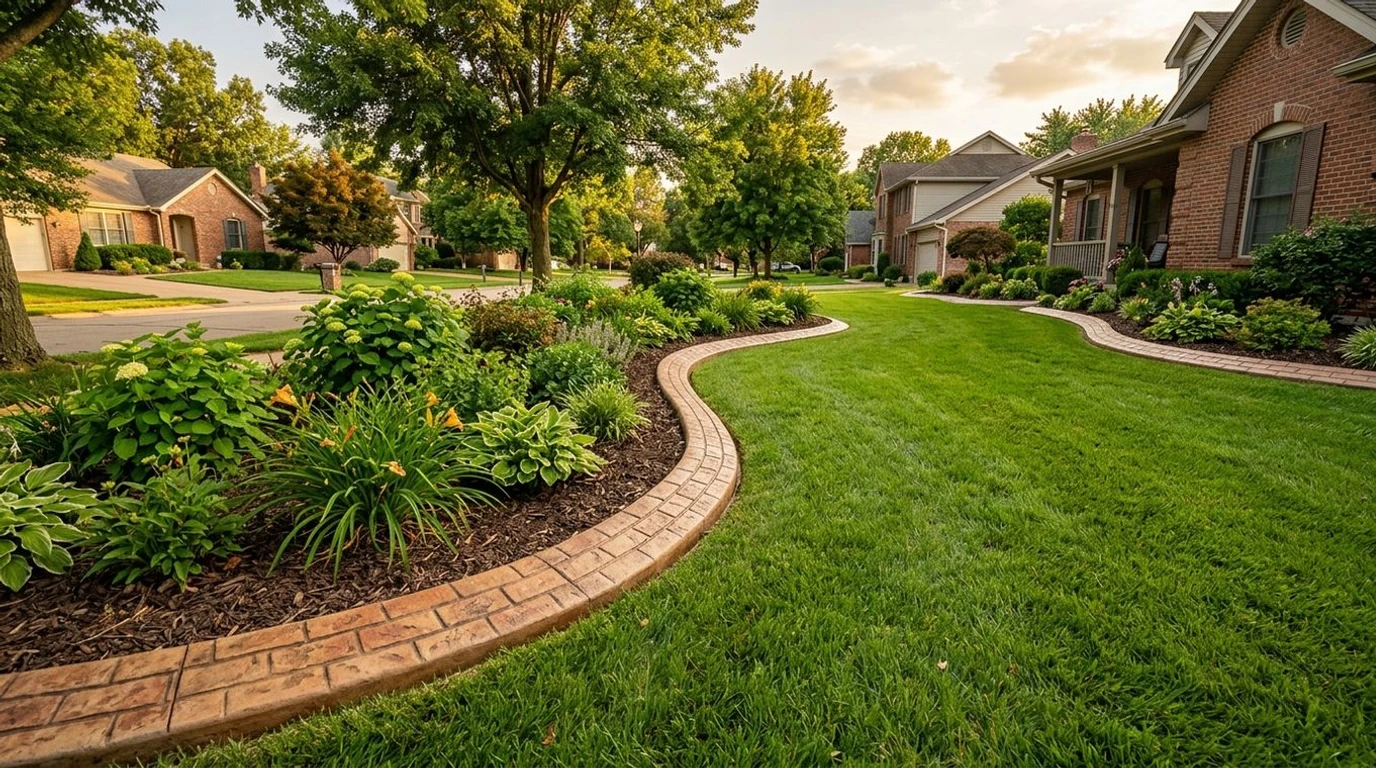
Stamped & Colored
- Same structural performance as plain concrete
- Multi-layer color system with antiqued depth
- Realistic stone, brick, or wood grain texture
- Architectural detail that elevates the whole yard
Where Stamped Curbing Works Best
Stamped curbing delivers the most value where the curbing is clearly visible and the home's exterior has architectural character worth complementing.
Traditional Brick Homes
Kirkwood, Webster Groves, Ladue
Cobblestone-stamped curbing in warm brick tones echoes the character of the brick without matching it directly.
Popular: Rollover profile, cobblestone stamp, terracotta color
Stone Veneer & Contemporary Homes
Chesterfield, Town and Country
Ashlar slate or random stone patterns mirror the clean lines of contemporary architecture.
Popular: Straight-face profile, ashlar slate, cool gray color
Formal Landscape Designs
Frontenac, Ladue
European fan cobble or ashlar slate reinforces the intentional symmetry of structured plantings.
Popular: Mushroom profile, fan cobble, two-tone antiqued
Craftsman & Cottage Properties
South County, Webster Groves
Wood grain or random stone patterns feel organic rather than formal, complementing mixed cottage gardens.
Popular: Rollover profile, wood grain, earth-tone color
Why Stamped Curbing Requires a Specialist
Stamped concrete curbing has a narrower margin for error than plain installations. The timing, the color staging, and the seal work all have to be done correctly within the pour window.
Stamp Timing Requires Experience
Stamping happens in a narrow window between too-soft and too-hard concrete. This tactile judgment call comes from doing it repeatedly — it's not something you learn from a manual.
Antiquing Agent Is a Skill
Getting the right contrast depth requires understanding how the colorant interacts with the base color at that specific stage of cure. Too much produces a muddy look; too little falls flat.
Color System Pre-Planned
The full color stack — base color, hardener, antiquing agent, and sealer sheen — is planned before the concrete goes down, not improvised on-site.
Physical Samples at Every Estimate
Ryan brings stamp patterns and color chips to the property so options can be reviewed next to your actual home exterior and landscape materials.
Maintaining Your Stamped Curbing
The stamped surface requires slightly more attention than plain gray concrete — mostly because the visual appearance is more noticeable when it degrades.
Reseal Every 2-3 Years
Protects antiquing color and base color from UV bleaching. Color depth recovers significantly with fresh sealer.
Annual Pattern Cleaning
Moderate pressure wash clears debris from stamp low points and restores contrast between high and low areas.
Fall Sealer Check
A fresh sealer application before winter prevents moisture infiltration that accelerates freeze-thaw damage.
Prompt Chip Repair
Small chips are more visible on colored surfaces. Quick repair with colored fill material prevents them from growing.
Stamped Curbing FAQ
Does stamped curbing hold up in Missouri winters?
Yes, with proper sealing. The stamp pattern doesn't create structural weakness — the texture is surface-level. The sealer prevents water infiltration that drives frost heave. Resealing every 2-3 years is important for long-term performance.
What stamp patterns work best in St. Louis neighborhoods?
Cobblestone patterns complement the brick Colonial and Tudor architecture common in Kirkwood, Webster Groves, and Ladue. Ashlar slate works well with stone veneer construction in Chesterfield and Town and Country. Random stone patterns are the most versatile across different home styles.
How is stamped curbing different from a decorative overlay?
The stamp is applied to the concrete itself during installation — the texture and color go into the fresh-poured surface, making them permanent. Overlays involve applying a surface material on top of existing concrete, which can peel. Poured-in stamps can't.
What's the price difference between stamped and plain curbing?
Stamped and colored curbing requires additional materials (stamps, color hardener, antiquing agent, sealer) and additional installation steps. Ryan provides a line-item estimate so you can see exactly what the additional treatments cost compared to a plain baseline.
Can stamped curbing be added to existing plain concrete?
Stamping can only be applied to fresh concrete during installation. New sections can have the stamp pattern, but they'll contrast with existing plain sections. Whether that works or a full replacement makes more sense is worth discussing during the estimate.
Add Real Character to Your Landscape's Edge
Stamped curbing is the kind of detail that visitors notice without necessarily knowing why — it just looks more finished. Request a free estimate and Ryan will bring samples to your property.