Repair Services
Curbing Repair Services
A cracked section of curbing doesn't necessarily mean the whole run needs replacement. Jones Curb Appeal repairs damaged, heaved, and cracked curbing across Greater St. Louis — restoring function and appearance without the cost of a full reinstall.
Understanding the Service
What Does Curbing Repair Involve?
Concrete curbing repair addresses damage to existing installed curbing — cracks, chips, frost heave displacement, section breaks, surface spalling, and color deterioration. The scope varies by damage type: some repairs are surface-level, others require removing and repouring a damaged section while preserving the surrounding run.
The repair process begins with a damage assessment to identify the cause, not just the symptom. A crack caused by tree root intrusion requires a different fix than a crack from freeze-thaw cycling. Understanding the cause determines whether the repair will hold long-term or simply delay the next failure.
Common Repair Scenarios
Damage Types We Repair
These are the most common reasons homeowners across Greater St. Louis contact Jones Curb Appeal for curbing repair work.
Frost Heave Damage
Missouri's freeze-thaw cycle is the leading cause of curbing damage. Water in clay soil freezes, expands, and pushes the curbing upward — cracking it at the heaved point and creating gaps that compound each winter.
Repair approach: Section removal, base prep improvement, repour and seal
Tree Root Intrusion
Established trees in older South County and Kirkwood neighborhoods have root systems that expand under landscape edging over time, lifting sections unevenly and creating visible cracks.
Repair approach: Root evaluation, section repour with root barrier where applicable
Impact & Snowplow Damage
Driveway-adjacent curbing takes hits from vehicles and snowplows. Impact breaks are typically localized — a corner chip, a section break at a curving radius, or a vertical crack from a direct hit.
Repair approach: Section removal and repour, color match, seal
Surface Spalling & Salt Damage
Deicing salt from adjacent driveways migrates to curbing and accelerates surface spalling — the outer layer flakes off, leaving a rough, porous surface that worsens over time.
Repair approach: Surface preparation, color restoration, penetrating sealer application
Faded & Weathered Color
Decorative curbing installed years ago without regular resealing shows UV bleaching and sealer wear. The structure is sound, but the appearance has degraded significantly.
Repair approach: Surface cleaning, color hardener or stain application, full reseal
Repair Types
Types of Curbing Repair
Not all curbing damage is the same. The right repair method depends on the type and extent of damage.
Crack Filling & Resealing
Hairline and minor cracks that haven't displaced the curbing can be addressed with crack filler and fresh sealer — stopping water infiltration before freeze-thaw damage spreads.
- Hairline cracks (under 1/8 inch width)
- Surface crazing (network of fine cracks)
- Minor edge chips without structural displacement
Section Replacement
Sections that have heaved, broken through, or separated from the adjacent run require removal and repour. The damaged section is cut back to clean concrete, repoured in profile, and color-matched.
- Frost heave displacement
- Full-depth breaks or section separation
- Snowplow or vehicle impact damage
- Tree root uplift sections
Surface Restoration & Resealing
Curbing that has lost color or shows surface spalling benefits from restoration — light surface prep, fresh color application, and a full resealing of the entire run.
- Faded color from UV exposure and sealer wear
- Surface spalling from deicing salt damage
- General weathering on older installations
The Repair Process
How We Approach Every Repair
Repair work requires a different kind of attention than new installation. Diagnosis matters as much as the fix.
Damage Assessment
Ryan inspects the full curbing run, identifies the type and cause of damage, and determines whether repair or replacement is the better value. You get an honest answer — not a sales pitch.
Clear Estimate
You receive an itemized, explained estimate before any work begins. If the damage warrants both repair and replacement options, Ryan prices both so you can make an informed decision.
Repair Execution
Damaged sections are cut back to clean concrete, the base is prepped to address the root cause, and new concrete is poured in profile. Every repair is treated with the same care as a new installation.
Color Match & Seal
Color-matching is applied to minimize the visual seam between repaired and existing curbing. A penetrating sealer locks in the repair and addresses the moisture entry point.
Final Walkthrough
Ryan walks the finished repair with you before packing up. If anything needs adjusting, it gets handled on the spot — not after a follow-up call.
Repair vs. Replacement
An Honest Assessment Comes First
Some damage situations favor repair; others have progressed past the point where repair is the better value. Ryan assesses the full run and gives a straight answer.
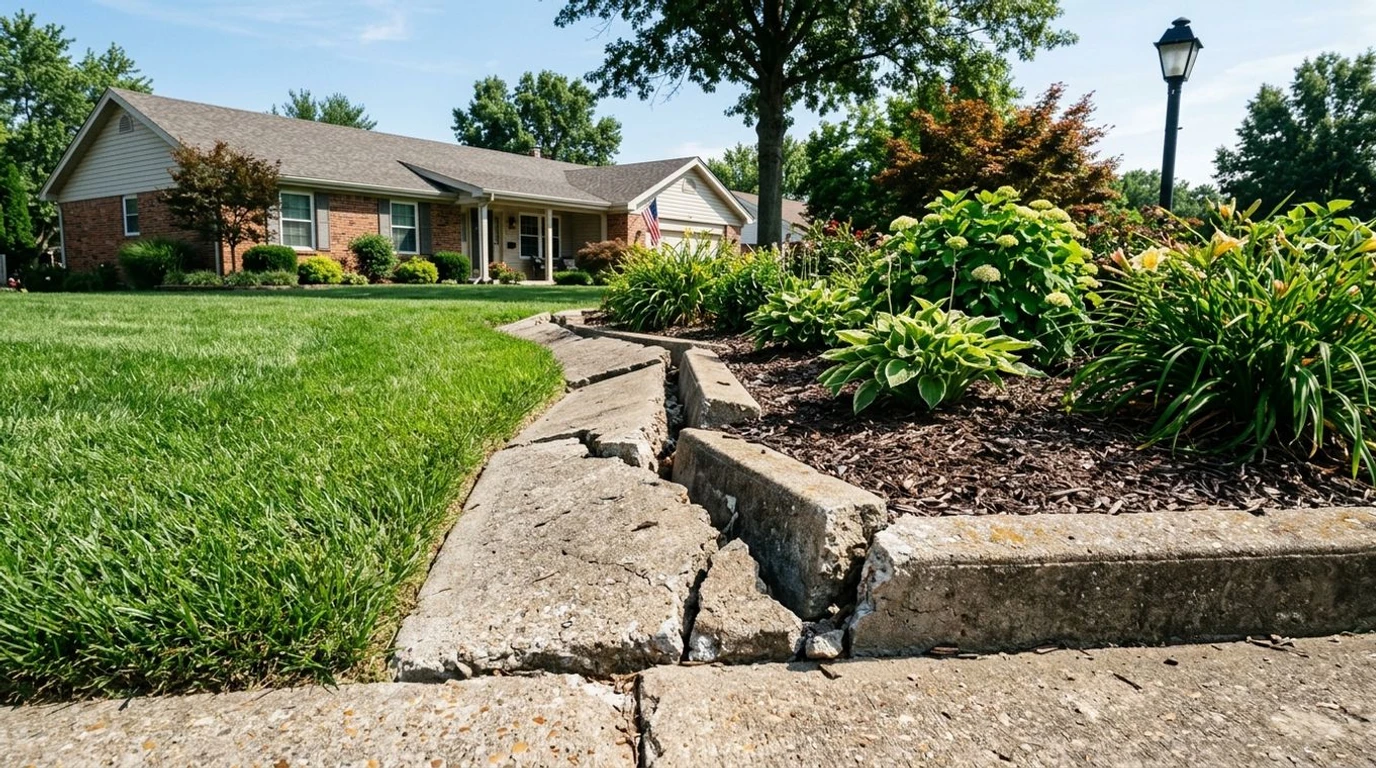
Cracks, heaving, and displacement from Missouri's freeze-thaw cycles compromise both appearance and function.
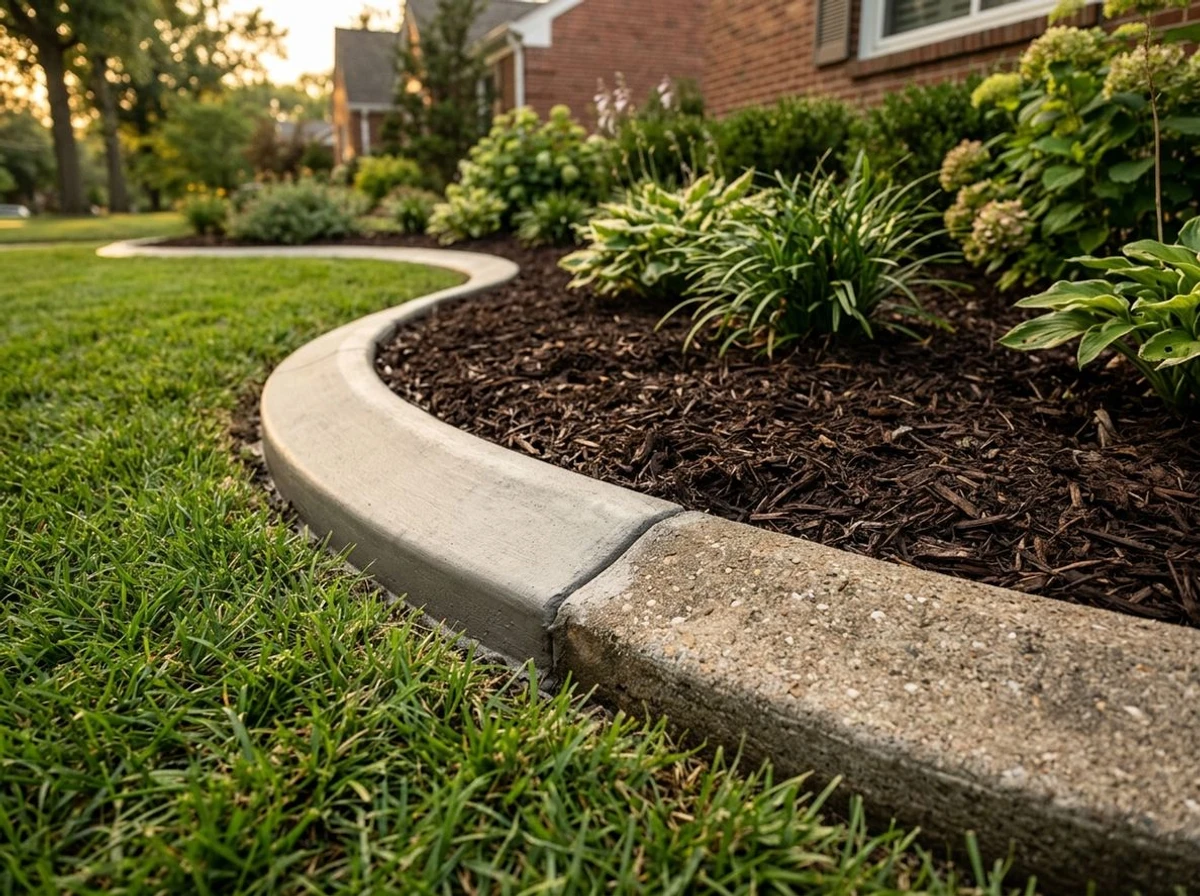
Structural integrity restored, color-matched, and sealed to prevent future moisture infiltration.
Repair or Replace? Get an Honest Answer.
If the cost of repair approaches replacement cost, Ryan says so directly — and gives a replacement estimate at the same visit so you have both numbers. No pressure, no upsell. Just a clear picture of your options.
Book a Free AssessmentPreventing Future Damage
Extend Your Curbing's Life After Repair
Reseal Regularly
Maintain sealer every 2-4 years on the full run. A functioning sealer coat is the primary barrier against water infiltration and freeze-thaw damage.
Keep Salt Away
Redirect deicing salt application away from curbing. Sand-based traction products near curbing edges avoid the salt-spalling damage cycle.
Post-Winter Inspection
Walk the curbing line in early March after hard winters. Small cracks caught before the next freeze cycle are simpler to address.
Monitor Tree Roots
Periodic monitoring and early-stage root pruning can slow uplift. Waiting converts a minor maintenance item into a full repair project.
Get an Honest Assessment of Your Curbing Damage
A site visit costs nothing. Ryan will walk the existing installation, identify the cause of damage, and give you a clear picture of what repair or replacement would involve.